
For a long time you gave everything away, and it felt good. Then the idea of charging arrives and something twists — like you are about to break a promise to the people who followed you for free.
You are not. The jump from free to paid only feels like a betrayal when it is sudden. Made gradually, it feels like what it is: you offering to help more, for people who want more.
Free content earns the right to sell
Your free work is not charity you will one day cash in. It is how people learn that you are worth paying. Every genuinely useful post is quietly building the trust a paid offer needs to survive.
So the paid offer should feel like the next chapter of the free content, not a wall that suddenly appears. Same voice, same person, more depth or more done-for-you.
Build a bridge, not a cliff
The step from free to paid is smaller when there are steps in between. Give people a way to raise their hand and go a little deeper before you ask for money.
- Free posts that teach and build trust.
- A free resource that captures an email — a small, real yes.
- A low-priced first offer that is easy to say yes to.
- A larger offer for the people that first one helped.
Price the outcome, not your nerves
The instinct is to price low out of fear. But a price that is too low signals low value and attracts the wrong buyers. Price against the outcome you deliver, not against your own discomfort.
Charging fairly is also respect — for your work and for buyers who would rather pay for something that works than gather ten more free things they never use.
Make the paid step effortless
When someone is finally ready to pay, the checkout should be the easy part. A clunky, confusing buying process talks people out of a decision they had already made.
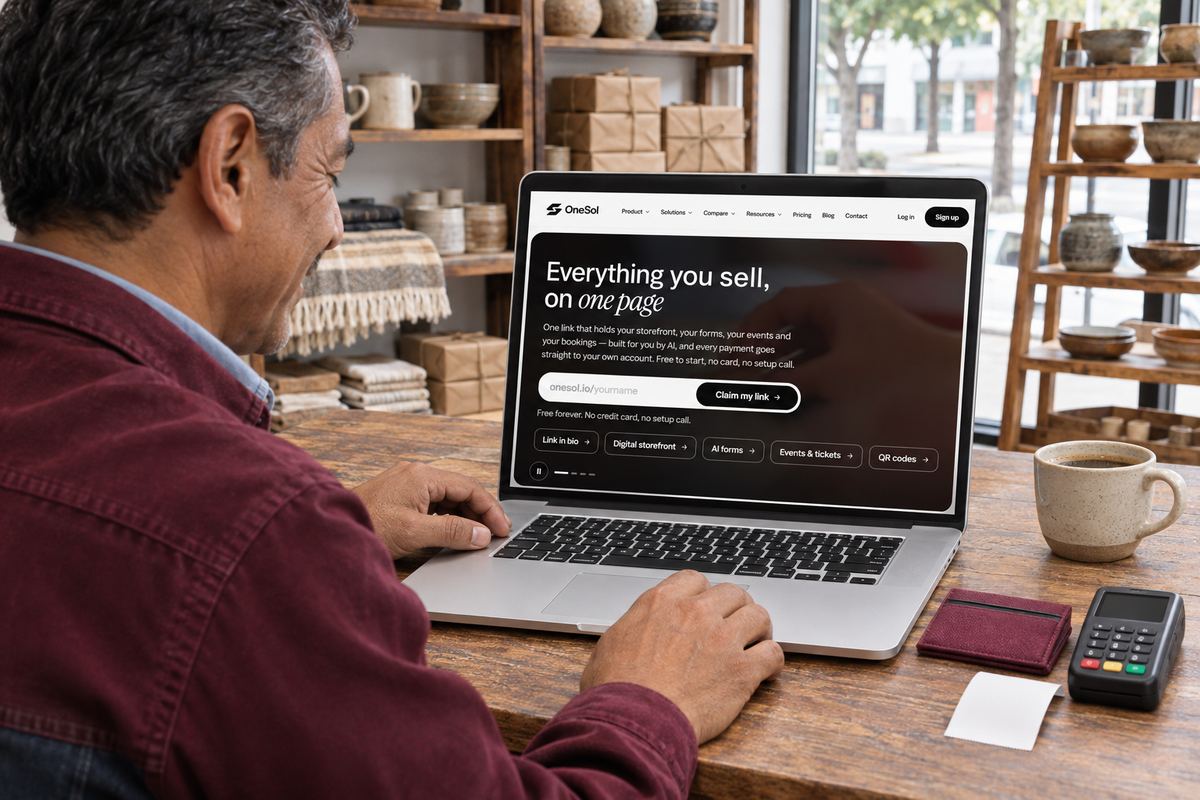
Put your free resource and your paid offer on the same simple page, with a checkout that just works. You can build both free at onesol.io, so moving from free to paid is one short, natural step for your audience.
The Bridge Offer Answers the Very Next Question
The awkward jump usually happens because the paid thing sits in a different category from the free thing. You give away short tips for months, then suddenly ask for £500 of coaching. The reader has to leap two rungs at once, and most won't. The fix is to make your first paid offer answer the exact question your best free piece leaves hanging.
Look at your most-shared free post and finish this sentence: 'Great, but now I'm stuck on…'. If your popular guide explains how to price a first product, the unanswered question is usually 'will this actually work for my product?'. That points straight at a small paid offer — a pricing template, a teardown of their numbers, a checklist they fill in — rather than a jump to a broad course. The offer feels like the obvious next step because it literally is the next step.
Keep the first rung deliberately low. A £19 template or a £39 mini-teardown does more for your credibility than a flagship product, because the person who buys it once is far more likely to buy the bigger thing later. You are not trying to earn a year's income from the bridge; you are turning a reader into someone who has paid you and been glad they did.
Write the Transition Sentence Before You Build Anything
Before you design a single sales page, write the one sentence that moves a person from the free content to the paid offer. If you can't write it plainly, the connection is too weak and no amount of design will rescue it. A good transition names what they've just learned and what they still need: 'You now know how to price it — if you'd like me to check your actual numbers, the teardown is here.'
Once that sentence exists, put it in two places. Add it at the natural end of the relevant free content, where the reader is already thinking about the problem, and put a close variant at the top of the offer page so the promise stays consistent. On a OneSol page you can drop the free guide and the paid product a scroll apart, so the reader meets the offer while the question is still fresh rather than hunting for it later.
Avoid the common failure of pitching cold — dropping a 'Buy my thing' with no lead-in from anything they've read. The offer should feel discovered, not interrupted. If a stranger who has read only that one free post can follow the logic from problem to paid solution without you explaining it, the jump has stopped being awkward.
A Quick Test Before You Launch
Run the offer through a short sanity check before it goes live. Most bridge offers that flop fail on one of a handful of predictable points, and each is quick to spot and cheaper to fix now than after launch.
If it clears all four, you have a genuine bridge rather than a cliff edge. If it stumbles on even one, that is almost always where the awkwardness your readers feel is coming from.
- Same audience: the buyer is the same person who read the free piece, not a new, more advanced one.
- One rung up: the price and commitment are a small step, not a category leap.
- Named continuation: your transition sentence connects the free question to the paid answer in plain words.
- Fast payoff: the buyer gets a usable result the same day, so the first purchase feels safe.